

Transportation in mountain towns comes with unique constraints—remote geography, steep terrain, seasonal population swings, and growing workforce housing challenges.
At the Mountain Towns 2030 Climate Summit in Breckenridge, transit leaders from Park City, Winter Park, and the Telluride–Mountain Village area shared how they are designing systems that meet these realities while advancing climate and community goals.
The session featured Alex Roy, PTP (Park City, Utah), Charles McCarthy, CCTM (Winter Park, Colorado), and James Loebe (Mountain Village Telluride, Colorado), moderated by Edward Parks , a global infrastructure leader). Together, they highlighted how mountain communities are rethinking mobility to reduce congestion, lower emissions, and better serve residents, workers, and visitors.
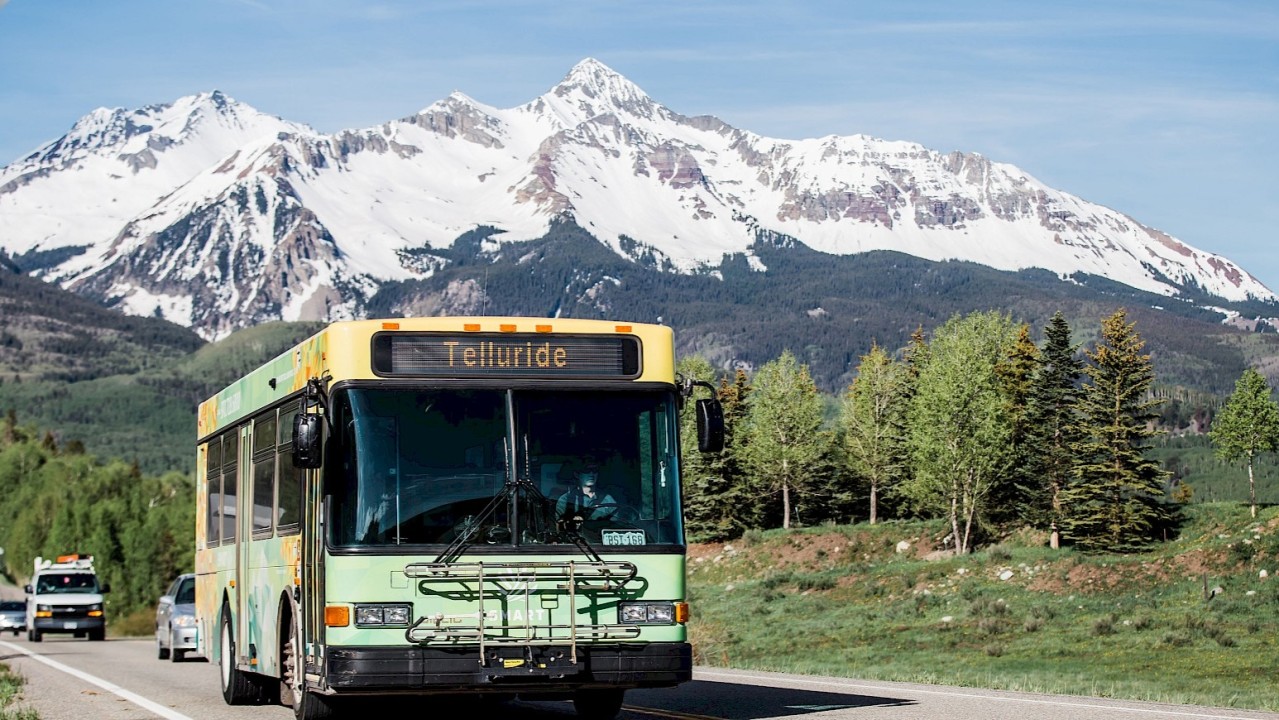
Transit in Mountain Towns Means Planning for Constant Change
Mountain transit systems must adapt to dramatic seasonal shifts. Winter tourism can drive intense peaks, but summer demand is increasingly significant as outdoor recreation grows year-round.
In Winter Park, CO, this dynamic defines the system. Only two routes run year-round, with the rest deployed in winter. In contrast, Telluride and Mountain Village have seen a reversal in ridership trends. Loebe explained, “We were 60/40 winter summer, and now we’re seeing like 40/60 winter summer,” reflecting the rise of summer visitation.
The takeaway is clear: mountain transit systems must be flexible, responsive, and built for variability.
Park City’s Regional Model Balances Local and Long-Distance Travel
Park City has separated local and regional transit into two complementary systems. Park City Transit focuses on in-town service, while High Valley Transit serves a broader footprint, connecting to surrounding communities and Salt Lake City.
This structure allows each system to specialize while still functioning as part of a larger network.
Within the city, transit has evolved from a single route into a comprehensive system connecting neighborhoods, resorts, and recreation areas. Recent additions, like trailhead connectors, aim to reduce congestion at popular outdoor destinations.
Roy emphasized the importance of aligning transit with housing and development patterns, adding that his team meets regularly with city officials planning low and moderate-income housing developments “to understand where the new developments might be happening… and we work with developers to talk about what the transit system would look like accessing those locations.”
Winter Park Is Building Service Around Workforce and Regional Need
Winter Park’s system, The Lift, serves a large area across Grand County and functions as the region’s only public transit provider.
Because many workers commute across long distances, transit planning is closely tied to workforce needs. McCarthy described bringing employers into the process. “I contacted all the department heads… and said, ‘Hey guys, let’s look at this schedule together. Tell me what works, tell me what doesn’t work,’” he explained.
At the same time, the system must balance visitor demand with essential community trips. As McCarthy noted, “If you set in a route that’s not going to serve those [major destinations], you have to be able to justify that through means other than just ridership.”
This reflects a core reality for mountain transit: not every route is about maximizing ridership—some are about maintaining access and community function.
The Telluride–Mountain Village Gondola Shows the Potential of Mountain-Specific Transit
The Telluride–Mountain Village gondola is a standout example of designing transit around terrain. It replaces what would otherwise be a long and winding drive with a direct aerial connection.
As Loebe explained, “We take a seven and a half mile car ride… about an eighteen- to twenty minute drive… and we turn it into a two and a half mile, direct, twelve minute ride.”
The system supports about 3.1 million passenger trips annually and avoids roughly 5,600 metric tons of CO₂ emissions each year. Loebe added, “It would take 42 50-passenger buses to equal the capacity of the gondola system.”
Originally built as part of environmental mitigation requirements, the gondola is now a core piece of regional infrastructure, funded through local mechanisms including a real estate transfer assessment and voter-approved taxes.
It highlights how non-traditional transit modes can be highly effective in mountain environments where roads are constrained.
Pilots and Experimentation Can Reveal What Works
Mountain communities are increasingly using pilot projects to test ideas before scaling them.
In Park City, experiments—from neighborhood traffic calming to transit service pilots—have helped refine long-term planning. A microtransit pilot revealed limitations, including overlap with existing routes and reduced reliability during peak demand.
As Roy explained, the system struggled when demand was highest, with riders encountering “zero availability” during peak winter conditions.
As a result, the city shifted resources toward fixed-route service, prioritizing predictability over flexibility.
Winter Park is taking a more targeted approach, using microtransit in areas where buses are less effective, rather than replacing core routes.
Electrification Offers Big Promise, but Mountain Conditions Still Matter
Both Park City and Winter Park are transitioning to electric buses, but mountain conditions introduce added complexity.
Roy highlighted both the promise and the challenge: “A cleaner system… a quieter system… [but] EV batteries lose a lot of juice in the winter.”
Cold temperatures, steep terrain, and charging logistics all impact performance, requiring new approaches to planning and operations.
Winter Park is early in its transition, working with partners to install charging infrastructure and identify where electric buses can be most effective. McCarthy emphasized the importance of collaboration, noting that success depends on working closely with operators and maintenance teams to adapt in real time.
Funding and Governance Remain Central Challenges
Transit systems depend on strong regional collaboration and reliable funding. In San Miguel County, early partnerships between municipalities eventually led to a broader regional transportation structure.
But building that kind of system is not always straightforward. Securing voter approval, aligning priorities across jurisdictions, and navigating funding uncertainty remain significant hurdles.
Still, the panel emphasized that transit investments can reduce the need for costly road expansions while improving long-term sustainability and quality of life.
Key Takeaways for Mountain Towns
- Design for seasonality: Plan for major swings in demand across winter, summer, and shoulder seasons.
- Separate local and regional service: Different systems can better serve distinct mobility needs.
- Align transit with housing and workforce: Coordinate with employers and developers to meet real demand.
- Test before scaling: Pilot programs can reveal what works—and what doesn’t.
- Match transit modes to terrain: Consider alternatives like gondolas where geography demands it.
- Plan electrification carefully: Cold weather, charging, and operations all impact performance.
Build strong funding and partnerships: Long-term success depends on regional collaboration and stable funding.Mountain towns sit at the intersection of climate pressure, tourism demand, and geographic constraint. But as this discussion showed, they are also leading innovation in mobility—developing systems that are not only more sustainable, but better suited to the places they serve.
Register for the Mountain Towns 2030 Sun Valley 2026 Climate Solution Summit Here.